Potato pancakes have a rich history spanning multiple cultures, from Eastern European Jewish latkes to German kartoffelpuffer to Swiss rösti. These crispy delights have persisted through generations because they’re economical, filling, and endlessly adaptable.
At their most basic, potato pancakes combine grated potatoes with minimal binding ingredients before being pan-fried to golden perfection.
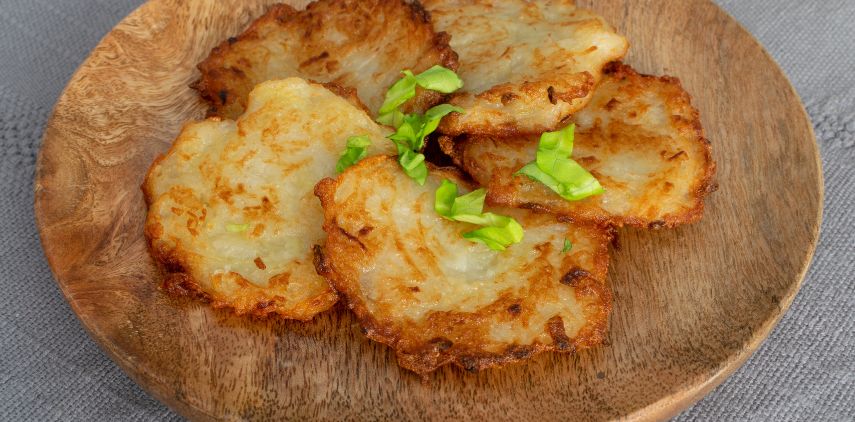
What makes potato pancakes so special is their delightful textural contrast—crackling, crispy edges giving way to a tender, savory interior. They’re the perfect canvas for toppings ranging from traditional applesauce and sour cream to more adventurous additions like smoked salmon, caviar, or even a fried egg.
Once you master the basic technique, you’ll find endless opportunities to customize them to your taste.
While they might seem straightforward, a few key techniques separate good potato pancakes from truly great ones. The secret lies in removing excess moisture from the potatoes, using the right binding agents, and mastering the frying temperature.
Don’t worry if your first batch isn’t perfect—potato pancakes are forgiving, and even the less-than-perfect ones are usually delicious! Let’s dive into creating these crispy treasures in your own kitchen.
INGREDIENTS
- 2 pounds (about 4 large) russet potatoes, peeled
- 1 medium yellow onion
- 2 large eggs, lightly beaten
- ¼ cup all-purpose flour (or matzo meal for traditional latkes)
- 1 teaspoon baking powder
- 1½ teaspoons salt
- ½ teaspoon freshly ground black pepper
- Vegetable oil or schmaltz (rendered chicken fat) for frying
- Optional: 2 tablespoons fresh herbs such as chives, dill, or parsley
The star of this recipe is undoubtedly the potato, and choosing the right variety makes all the difference. Russets are ideal due to their high starch content, which helps create that perfect crispy exterior.
Yukon Golds can work in a pinch, but they’ll yield a slightly less crispy result. Fresh potatoes are crucial—avoid any with green spots or those that have begun to sprout, as they can impart a bitter taste.
The binding ingredients play an important supporting role without stealing the spotlight from the potatoes. Eggs provide structure, while flour absorbs excess moisture to help the pancakes hold together.
The baking powder might seem unusual, but it adds a subtle lightness to what could otherwise be a dense pancake. Feel free to experiment with the seasonings—some traditions call for garlic powder, paprika, or a pinch of nutmeg for depth of flavor.
INSTRUCTIONS
Begin by grating the peeled potatoes and onion. You can use a food processor with a grating attachment for speed, or hand grate them using the large holes of a box grater for a more traditional texture.
Immediately place the grated mixture in a large bowl of cold water to prevent discoloration.
Drain the potato-onion mixture thoroughly, then transfer to a clean kitchen towel. Wrap the mixture in the towel and twist tightly over the sink to squeeze out as much moisture as possible—this is perhaps the most crucial step for achieving crispy pancakes!
Transfer the squeezed mixture to a large bowl.
Add the beaten eggs, flour, baking powder, salt, pepper, and optional herbs to the potato mixture. Stir until just combined, being careful not to overmix.
Heat ¼ inch of oil in a heavy-bottomed skillet (cast iron works beautifully) over medium heat until shimmering but not smoking, around 350°F if you have a thermometer.
Using a ¼ cup measure or large spoon, carefully drop portions of the potato mixture into the hot oil, flattening slightly with the back of the spoon. Don’t overcrowd the pan—leave enough space to flip them easily
Fry until the edges are deeply golden and crispy, about 3-4 minutes per side.
Transfer finished pancakes to a paper towel-lined baking sheet or wire rack. If making a large batch, keep them warm in a 200°F oven while completing the remaining pancakes.
Add additional oil to the pan as needed, allowing it to return to temperature before adding more batter.
Serve immediately while still hot and crispy. Traditional accompaniments include sour cream, applesauce, or both—the cool, creamy sour cream and sweet applesauce provide perfect counterpoints to the savory, crispy pancakes.
For a more substantial meal, top with smoked fish or a dollop of caviar for a luxurious touch.
FAQs
Why are my potato pancakes falling apart when I try to flip them?
This usually happens when there’s either too much moisture remaining in the potatoes or when you try to flip them too early.
Make sure you’ve thoroughly squeezed the moisture from the grated potatoes, and allow the pancakes to form a sturdy golden crust before attempting to flip them. Also, ensure your oil is hot enough—if it’s not sizzling when the batter hits the pan, it’s not ready.
Can I make potato pancakes ahead of time?
While potato pancakes are best enjoyed fresh from the pan, you can make them a few hours ahead and reheat them. Place them on a baking sheet in a single layer and reheat in a 375°F oven for about 5-7 minutes until crispy again.
However, avoid refrigerating the raw potato mixture, as potatoes oxidize quickly and will turn an unappetizing gray color.
Can I make these gluten-free or vegan?
Absolutely! For gluten-free potato pancakes, substitute the all-purpose flour with a gluten-free flour blend or potato starch.
For vegan versions, you can use a flax egg (1 tablespoon ground flaxseed mixed with 3 tablespoons water, left to gel for 15 minutes) in place of each egg. The texture might be slightly different, but they’ll still be delicious.
Some vegan recipes add a bit more baking powder or a tablespoon of cornstarch for better binding.
Potato pancakes are more than just a recipe—they’re a celebration of how something as humble as the potato can be transformed into a dish that spans cultures and generations.
Whether you’re making them as part of a holiday tradition or just as a cozy weekend breakfast, there’s something undeniably satisfying about the sizzle of potato batter hitting hot oil and the golden treasures that emerge.
Don’t be afraid to make this recipe your own. Add grated apple for sweetness, incorporate other vegetables like zucchini or carrots, experiment with different herbs and spices, or try serving them with unconventional toppings.
The basic technique remains the same, but the variations are endless—making potato pancakes a versatile addition to any cook’s repertoire
Remember that practice makes perfect when it comes to potato pancakes. Your first few might not be picture-perfect, but they’ll still be delicious. And with each batch, you’ll get better at gauging the right moisture level, heat, and timing.
Before long, you’ll be turning out golden, crispy potato pancakes that would make any grandmother proud—and creating your own traditions around this beloved dish.

