Despite its name, German Chocolate Cake isn’t actually from Germany – it was named after Sam German, who developed a sweet baking chocolate for Baker’s Chocolate Company in 1852.
This iconic American dessert has been stealing hearts and satisfying sweet tooths for generations, and today I’m sharing the perfect recipe that delivers bakery-quality results right from your home kitchen.
Ingredients
For the Chocolate Cake:
- 1 cup unsalted butter, softened
- 1¾ cups granulated sugar
- 4 large eggs, room temperature
- 1 teaspoon vanilla extract
- 4 oz German sweet chocolate, melted and cooled
- 2¼ cups all-purpose flour
- 1 teaspoon baking soda
- ½ teaspoon salt
- 1¼ cups buttermilk, room temperature
For the Coconut-Pecan Frosting:
- 1 cup evaporated milk
- 1 cup granulated sugar
- 3 large egg yolks
- ½ cup unsalted butter
- 1 teaspoon vanilla extract
- 1⅓ cups sweetened flaked coconut
- 1 cup chopped pecans
For the Chocolate Buttercream (optional, for sides):
- ½ cup unsalted butter, softened
- 3 cups powdered sugar
- ⅓ cup unsweetened cocoa powder
- ⅓ cup heavy cream
- 1 teaspoon vanilla extract
Cooking Instructions
1. Begin by preheating your oven to 350°F (175°C) and preparing three 9-inch round cake pans by greasing them thoroughly with butter and dusting with cocoa powder.
This prevents sticking and adds an extra touch of chocolate flavor. Line the bottoms with parchment paper for extra insurance against sticking.
2. Melt the German sweet chocolate in a microwave-safe bowl in 30-second intervals, stirring between each interval until completely smooth.
Set aside to cool slightly while you prepare the rest of the batter. This prevents the chocolate from seizing when mixed with other ingredients.
3. In a large mixing bowl, cream together the softened butter and granulated sugar using an electric mixer on medium speed for about 4-5 minutes until the mixture becomes light and fluffy.
This step is crucial for creating the cake’s tender crumb structure.
4. Add the eggs one at a time, beating well after each addition to ensure proper incorporation. Mix in the vanilla extract and the cooled melted chocolate, blending until the mixture is uniform and glossy.
5. In a separate bowl, whisk together the flour, baking soda, and salt. Beginning and ending with the dry ingredients, alternate adding the flour mixture and buttermilk to the butter mixture in three additions of flour and two of buttermilk.
Mix on low speed just until combined after each addition – overmixing can result in a tough cake.
6. Divide the batter evenly among the prepared pans, using a kitchen scale for the most accurate results if available.
Smooth the tops with an offset spatula and bake for 25-30 minutes, or until a toothpick inserted in the center comes out with just a few moist crumbs attached.
7. Allow the cakes to cool in their pans for 10 minutes before turning them out onto wire racks to cool completely. This prevents the layers from breaking while still warm.
8. For the coconut-pecan frosting, combine the evaporated milk, sugar, and egg yolks in a medium saucepan.
Cook over medium heat, stirring constantly, for about 12-15 minutes until the mixture thickens enough to coat the back of a spoon. The consistency should resemble a thin custard.
9. Remove the frosting from heat and stir in the butter and vanilla until the butter is completely melted and incorporated. Add the coconut and chopped pecans, stirring until evenly distributed.
Allow the frosting to cool to room temperature before using – it will thicken as it cools.
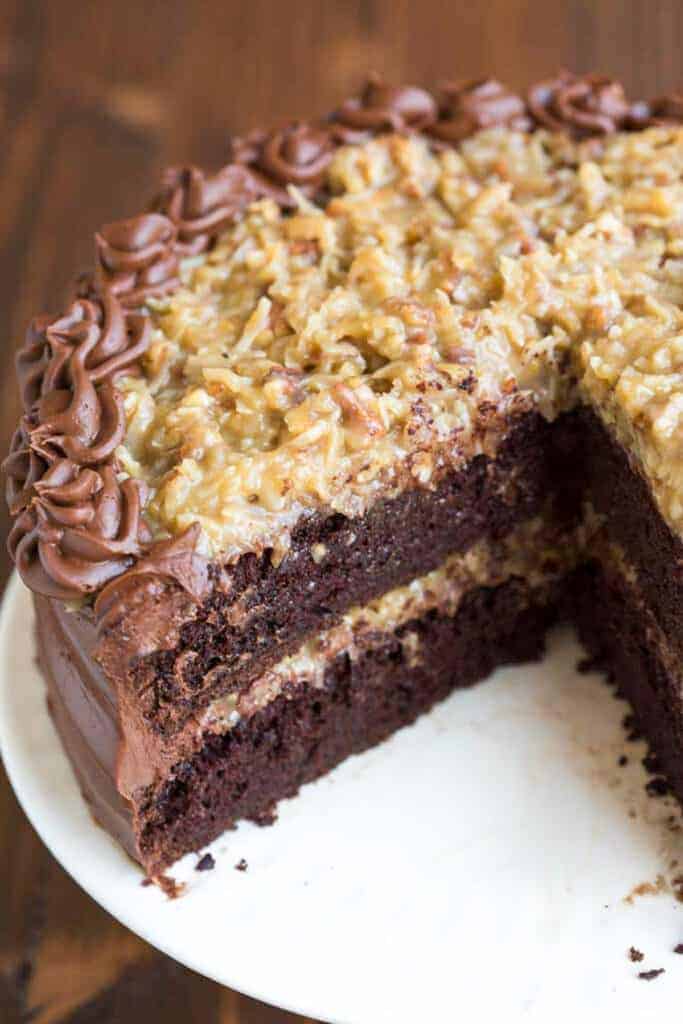
10. To assemble the cake, place one layer on your serving plate and spread about one-third of the coconut-pecan frosting evenly over the top, leaving the edges unfrosted.
Repeat with the remaining layers, ensuring the final layer receives a generous coating of the signature frosting on top.
Variations
Chocolate Bourbon Twist: Add 2 tablespoons of bourbon to the coconut-pecan frosting along with the vanilla extract.
The bourbon adds a sophisticated depth of flavor that pairs beautifully with the chocolate and complements the nuttiness of the pecans.
Gluten-Free German Chocolate Cake: Substitute the all-purpose flour with a 1:1 gluten-free flour blend that contains xanthan gum.
Ensure all other ingredients are certified gluten-free, and add an extra 2 tablespoons of buttermilk to maintain the proper moisture level.
Individual Mini Cakes: Transform this recipe into elegant individual desserts by baking the batter in muffin tins for 18-22 minutes.
Top each mini cake with a dollop of coconut-pecan frosting and serve at parties or special occasions for a more refined presentation.
Salted Caramel German Chocolate: Replace half of the granulated sugar in the frosting with homemade or store-bought caramel sauce, and add a pinch of sea salt.
This creates a salted caramel version that adds another layer of complexity to the traditional flavor profile.
FAQs
Can I make this cake ahead of time?
Absolutely! The cake layers can be baked up to 2 days in advance and stored wrapped in plastic wrap at room temperature, or frozen for up to 3 months.
The coconut-pecan frosting can be made 1 day ahead and refrigerated, though you should bring it to room temperature before using.
Why is my coconut-pecan frosting too thin?
The frosting needs adequate cooking time to thicken properly. If it’s still thin after cooling, return it to the stovetop and cook for an additional 2-3 minutes while stirring constantly.
Remember that it will continue to thicken as it cools to room temperature.
Can I use regular chocolate instead of German sweet chocolate?
While German sweet chocolate is preferred for authentic flavor, you can substitute it with 3 oz of semi-sweet chocolate plus 1 tablespoon of sugar.
However, the flavor will be slightly different – German sweet chocolate is milder and sweeter than regular baking chocolate.
How should I store leftover cake?
Store covered at room temperature for up to 3 days, or refrigerate for up to 1 week. If refrigerated, allow the cake to come to room temperature for about 30 minutes before serving for the best texture and flavor.
My cake layers are domed – how can I prevent this?
Ensure your oven temperature is accurate with an oven thermometer, and try baking at 325°F instead of 350°F for a more even rise.
You can also use cake strips around the pans or level the layers with a serrated knife after cooling.

